
Structure the field-to-control-center route
Intelligent transportation systems can include roadside cameras, message signs, detectors, weather equipment, station devices, rail infrastructure or tunnel cabinets. These endpoints need a documented route through a local access cabinet, a transmission backbone and a control or ITS platform. Treating the whole project as a single network obscures the places where maintenance responsibility changes.
Begin with a location and endpoint list covering interface, power, cabinet, distance, cable route, uplink and destination system. This record is the basis for choosing suitable industrial Ethernet, serial connectivity and media-conversion roles.
Plan access, backbone and management layers
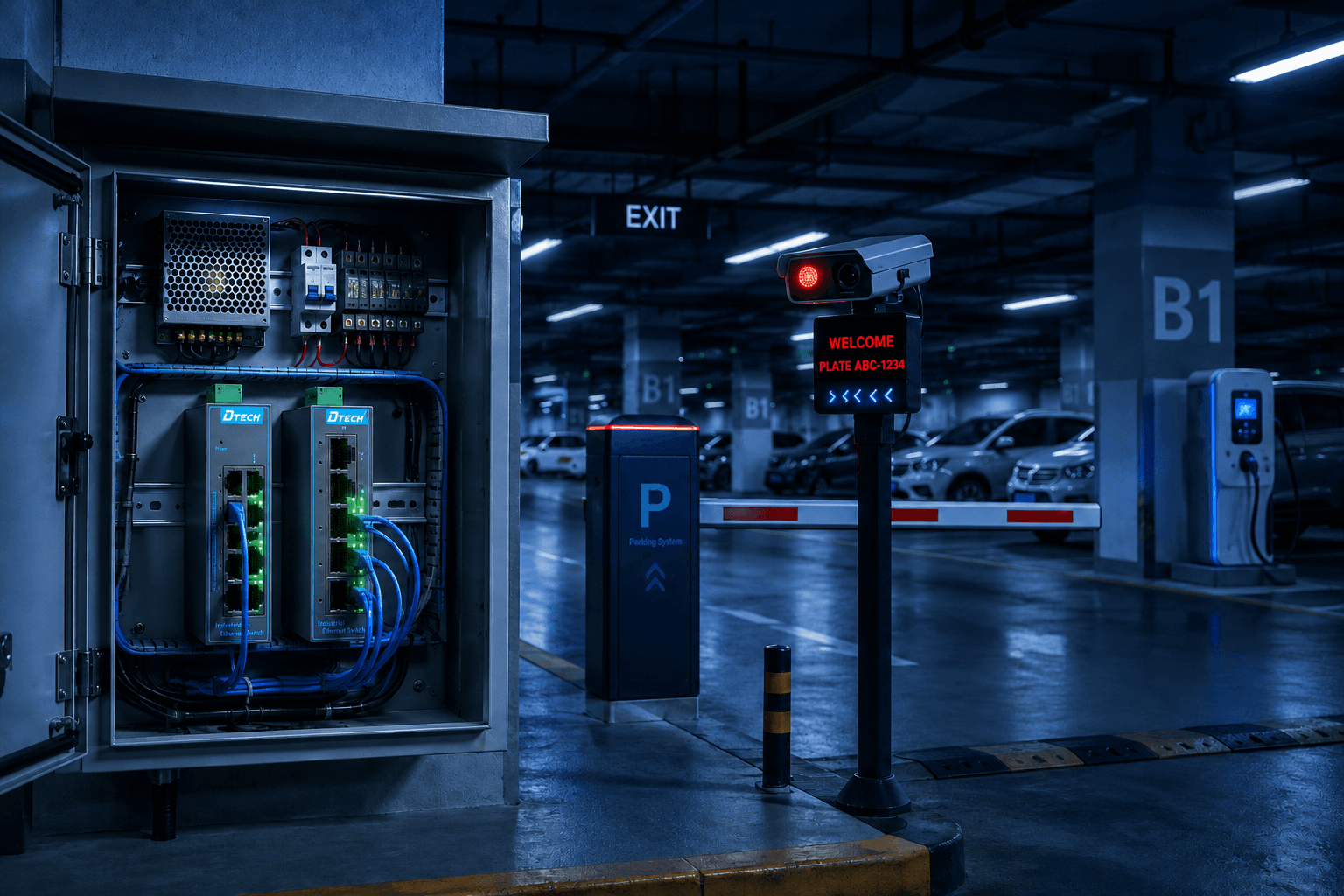
At the access layer, industrial switches can connect compatible field Ethernet endpoints inside a cabinet. Serial device servers or converters may be relevant where compatible legacy controllers or instruments need a defined network path. The backbone layer may use the transmission medium appropriate to the approved distance and deployment design.
For a monitoring center, document the physical uplink, network addressing, configuration responsibility and application boundary. DTECH connectivity supports the path; the responsible ITS, signaling, video or control-system engineer must assess the complete application, safety and regulatory requirements.
Make long-life maintenance practical
Transport infrastructure benefits from consistent cabinet IDs, equipment labels, port schedules and cable-route records. Installation preparation should also cover mounting, power, grounding, enclosure, access and environmental requirements against the selected model documentation.
If factory testing or shipment inspection is requested, define the product-level scope before release. Checks may cover requested functions, model and quantity, labels, accessories, documentation and packaging. They do not replace system-level commissioning, safety verification or site acceptance.
Recommended visuals
Show the connection path with real, approved evidence.
Hero image: Use a real application, cabinet or product image that shows the field environment and leaves space for the page headline.
Engineering image: Place an approved control-cabinet, installation-preparation or factory-test image after the architecture section. Caption it with the actual process shown.
Delivery image: Where available, use a real shipment-inspection or packaging image. Do not use AI imagery as evidence of a completed customer project, factory audit or certification.
Conclusion
Make the connectivity decision from the actual project conditions.
Plan robust industrial communication paths for traffic, rail, tunnel, station and roadside infrastructure systems. A clear equipment list, network path and installation record give the project team a more dependable basis for selection, testing and support than a generic product list alone.